 |
 |
 |

 |
|
|

RESPONSIBLE DRINKING GUIDELINES
 |
The Dietary Guidelines are published jointly by the U.S. Department of Agriculture and the U.S. Department of Health and Human Services every five years. In the latest version of the guidelines, the US government no longer sets a guidelines on low risk alcohol consumption. The guidelines advise “Consume less alcohol for better overall health”.
When not to drink
The US Dietary Guidelines 2025-2030 identify some circumstances in which people should not drink alcohol; " People who should completely avoid alcohol include pregnant women, people who are recovering from alcohol use disorder or are unable to control the amount they drink, and people taking medications or with medical conditions that can interact with alcohol. For those with a family history of alcoholism, be mindful of alcohol consumption and associated addictive behaviors”. It is also illegal for young adults under the age of 21 to drink in most states.
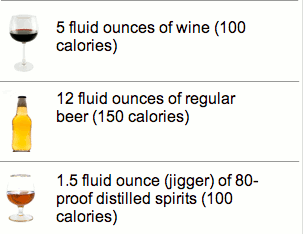
| A drink is defined as: |
 |
| Why not try the UNIT CALCULATOR to see how many units your favourite drinks contain? Or download an app for your phone |
NIAAA drink calculator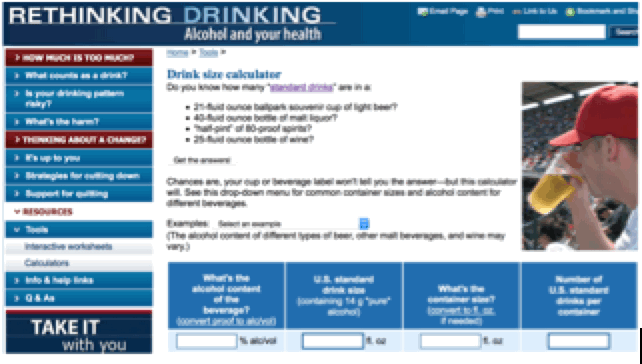 |
 |
In the US, a drink is defined as 12 fluid ounces of regular beer (5% alcohol), 5 fluid ounces of wine (12% alcohol), or 1.5 fluid ounces of 80 proof (40% alcohol) distilled spirits. One drink contains 0.6 fluid ounces of alcohol.’'
It is important to remember that the alcoholic content of drinks will vary depending on the size of the pour. Also, home pours and cocktails may contain significantly more than these standard drink averages.
How alcohol effects us depends on many factors such as our age, size, sex and health. How quickly we drink, and whether it is with food or on an empty stomach, also effects how quickly we absorb alcohol.
The consumption of small amounts of alcohol on a regular basis is more healthful than binge drinking large amounts of alcohol occasionally. Episodes of heavy intake (e.g. weekend bingeing alternating with weekday abstinence) is associated with health and safety risks.
Women's bodies are generally smaller and have less body water, so alcohol concentrations rise more quickly. Women have less body water than men so the concentration of alcohol in their blood stream is proportionally higher. So, if a woman weighing 60 kgs drinks a double vodka then a man of the same size will need to drink a triple in order to reach the same blood alcohol level. There is also some evidence that women break down alcohol slightly differently. The enzyme ADH breaks down alcohol in the liver and in the lining of the stomach; and women have less of it, so alcohol is broken down more slowly.
Generally, those adults who choose to drink should do so in a sensible manner as part of a healthy diet and lifestyle and preferably around mealtimes or with food.
How much do Americans Drink?
Approximately 134.3 million Americans aged 12 and older (46.6% of that population) report drinking alcohol in the past month, according to federal NSDUH data provided by NIAAA. 21% of Americans also reported binge drinking in the past month (Drinking 5 or more drinks for men, or 4 or more drinks for women, on a single occasion.). Among adults, including those who do not drink, alcoholic beverages contribute approximately 5 percent of calorie intake (3 to 4% of calories for women and 5 to 7% for men); this translates into approximately 9 percent of calories among those who drink.
Potential Health Benefits of Moderate Alcohol Use
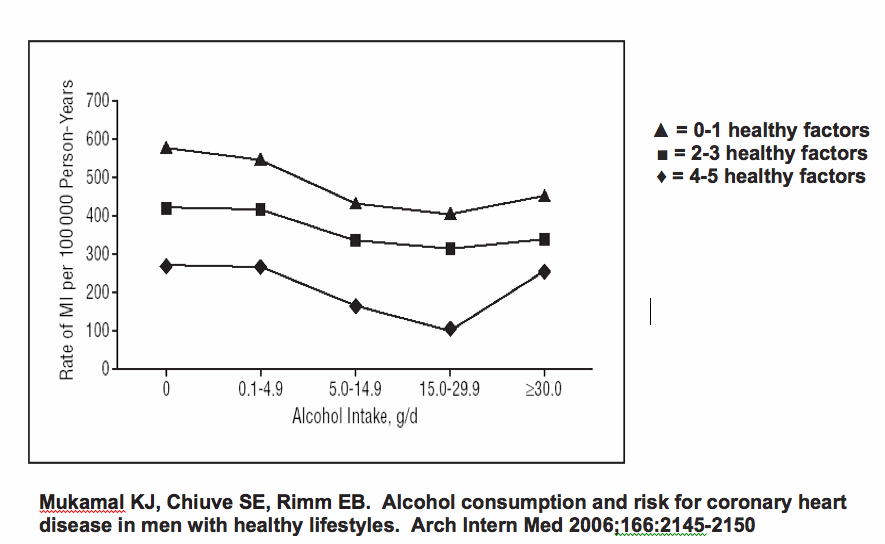
When most people talk about the benefits of alcoholic beverages, they're usually referring to the pleasant, relaxed feeling and enhanced sociability that often result from drinking. When scientists and health professionals talk about the benefits of alcohol use, however, they are primarily referring to the fact that moderate drinking may reduce the risk of certain diseases, especially coronary heart disease. Among middle-aged and elderly people, moderate drinkers have lower mortality rates than abstainers - this is known as the 'J' shaped curve, or French paradox. In simple terms, alcohol stimulates the liver to produce 'good' HDL cholesterol and 'thins' the blood, helping prevent the build up of harmful clots or hardening of the arteries. In contrast, among younger adults alcohol consumption appears to provide little, if any, health benefit, and excess alcohol consumption among young adults is associated with a higher risk of traumatic injury and death. Consumers should enjoy drinking in moderation as one element of the 'healthy lifestyle' choices of regular exercise, not smoking, staying slim and a diet rich in fruit and vegetables and low in saturated fat. If you can manage this and enjoy drinking in moderation, your risk of chronic diseases reduce by more than 50%.Impact of excessive alcohol consumption
Excessive alcohol use causes about 178,000 deaths in the United States each year, making it a leading preventable cause of death. These fatalities stem from both long-term chronic conditions, such as liver disease and cancer, and acute incidents like vehicle crashes and poisonings. Excessive drinking costs the United States approximately $249 billion each year, according to data from the Centers for Disease Control and Prevention (CDC) and the National Institute on Alcohol Abuse and Alcoholism (NIAAA).
Key definitions for alcohol
What is moderate alcohol consumption? Moderate alcohol consumption is defined as up to 1 drink per day for women (14g) and up to 2 drinks per day for men.
What is heavy of high risk drinking? High-risk drinking is the consumption of 4 or more drinks on any day or 8 or more drinks per week for women and 5 or more drinks on any day or 15 or more drinks per week for men.
What is binge drinking? Binge drinking is the consumption within about 2 hours of 4 or more drinks for women and 5 or more drinks for men.
The bottom line message
Most people who drink do so moderately and responsibly as part of a healthy diet and lifestyle. Common sense tells us to drink responsibly at any time and especially if you are planning to drive or undertake other activities that require skills. Alcohol can be enjoyed as part of a healthy lifestyle in moderation, but it is not recommended that anyone begin drinking or drink more frequently on the basis of their health. Enjoyment of wine, beer and spirits has formed part of a pleasurable part of many traditions, cultures and some religions around the globe since civilization began.
 |
The CDC provide support to Americans wanting to cut down on alcohol see https://www.cdc.gov/alcohol/checkyourdrinking/index.html |
|---|
Further sources of information..
Responsible drinking guidelines around the world: https://www.iard.org/science-resources/detail/Drinking-Guidelines-General-Population
Foundation for Advancing Alcohol Responsibility responsibility.org
Rethinking Drinking https://rethinkingdrinking.niaaa.nih.gov/tools/calculators/alcohol-drink-size-calculator
Drinksmart drinksmart.com/
Dietary Guidelines for Americans https://cdn.realfood.gov/DGA.pdf
National Institute on Alcohol Abuse and Alcoholism Health and Social Issues Research Information niaaa.nih.gov/research
Other Public Health Resources:
National Library of Medicine: www.nlm.nih.gov/
American Heart Association: www.heart.org
American Cancer Society: www.cancer.org
American Academy of Family Physicians: www.aafp.org/
American Medical Association: www.ama-assn.org/
American Diabetes Association: https://diabetes.org/
American Stroke Association: www.stroke.org/